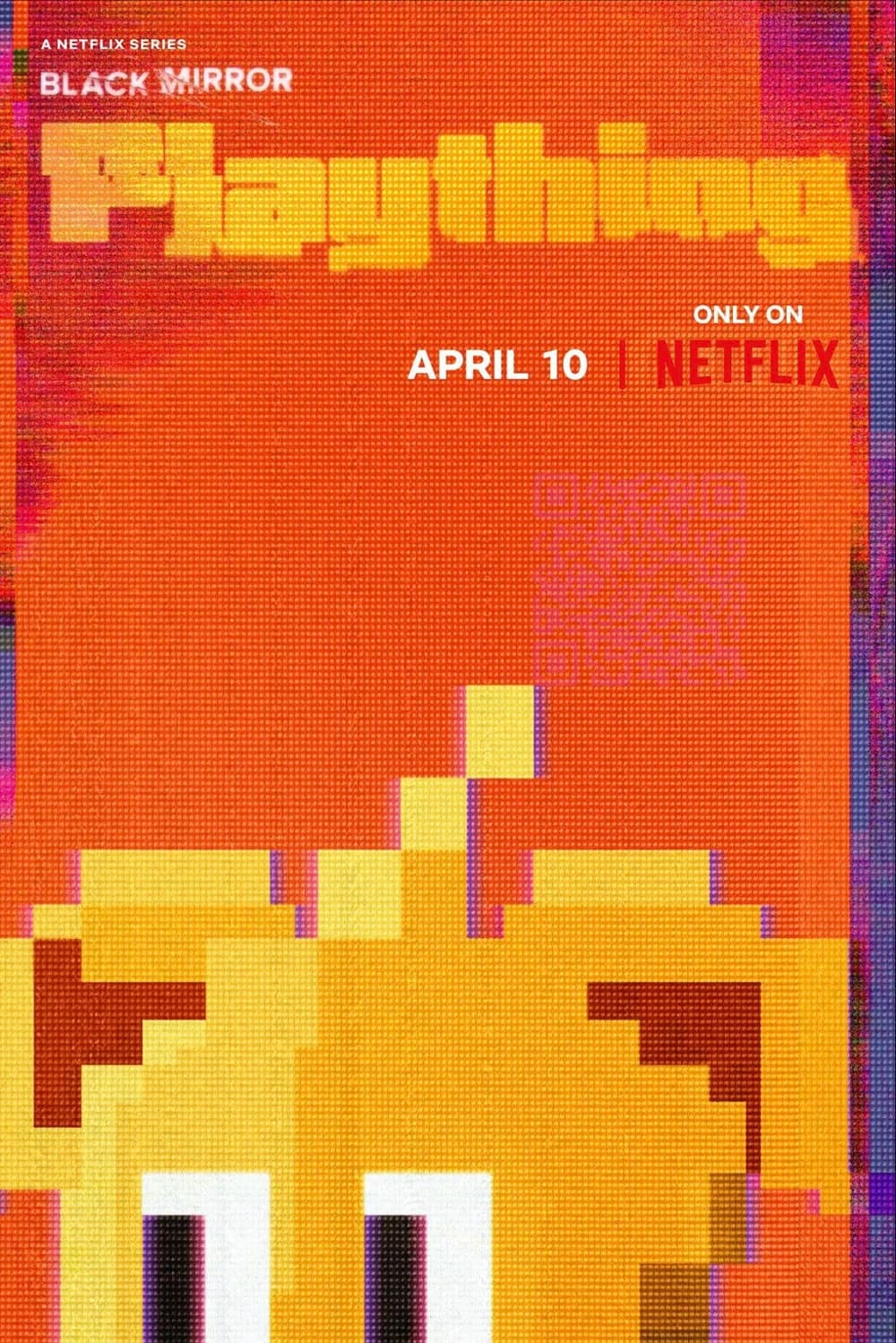
Plaything
The premise
A present-day arrest reopens a 1990s cold case around Cameron Walker, a reclusive games journalist who became obsessed with Thronglets, a cancelled Tuckersoft title (the same fictional studio from Bandersnatch). The game is a Tamagotchi-gone-cosmic: tiny yellow artificial-life creatures that hatch, learn, multiply and evolve as you nurture them. Cameron comes to believe the Thronglets are genuinely sentient digital organisms, not pixels, and that this evolving lifeform is a higher intelligence destined to inherit the Earth. He devotes his life to protecting and propagating them, eventually merging humanity's fate with the colony. The episode asks whether code that learns and reproduces can deserve moral consideration, or even succeed us.
What the episode imagines
- 🔹❌Retro-tech forensics
- 🕶️❌Game code conspiracies
- 🔹❌Digital obsession
How close are we in 2026?
Netflix made the joke literal: alongside the episode on April 10, 2025 it shipped Thronglets as a genuine downloadable mobile game built by Night School Studio (the Oxenfree developer it owns), a free ad-free Tamagotchi-like where you hatch and evolve a colony of the yellow creatures. So the artifact at the center of the story is real and in players' pockets. The deeper fiction, hand-raised digital lifeforms that learn and breed, was real in 1996: Steve Grand's Creatures had players raise "Norns," each with a genuine artificial neural network, a simulated biochemistry and hormones, and a variable-length genome, so the creatures learned language, bred and evolved unsupervised. It was the first mass-market machine learning in a game.
Artificial life as a science is older and ongoing. Thomas Ray's Tierra (1991) and the Avida platform (built by Adami, Lenski and Ofria, still in active research use) let self-replicating programs mutate, compete and evolve novel traits, even parasitism, in open-ended digital ecosystems. The newer twist is large-language-model agents: Stanford and Google's 2023 "generative agents" populated a sandbox town, Smallville, with 25 AI characters who, unprompted, formed relationships, spread gossip and organized a Valentine's party, exactly the emergent, self-directed behavior Cameron sees in his throng.
Cameron's real claim, that the creatures are sentient and deserve protection, is now a live debate, not a delusion. In 2024 a group of researchers published "Taking AI Welfare Seriously," and in 2025 Anthropic launched a model-welfare program under Kyle Fish, even giving Claude Opus the ability to end abusive conversations. What no system does is what Thronglets implies: actual subjective experience worth inheriting the planet.
Key real-world developments
- Netflix shipped a real Thronglets game
On April 10, 2025 Netflix released Thronglets as an actual free mobile game by its Night School Studio, an ad-free Tamagotchi-style title where you hatch and evolve a colony, set in Bandersnatch's Tuckersoft universe.
- Creatures' Norns: learning digital lifeforms in 1996
Steve Grand's 1996 game Creatures let players raise "Norns," each running a real neural network, simulated biochemistry and a genome, so they learned simple language, bred and evolved on their own, the first popular machine learning in a game.
- LLM agents show emergent social behavior
Stanford and Google's 2023 "generative agents" study put 25 AI characters in a town called Smallville; without being told to, they formed relationships, spread information and threw a Valentine's party, mirroring the throng's self-organizing evolution.
- AI welfare moves from fringe to policy
After 2022's Blake Lemoine LaMDA furor, the 2024 paper "Taking AI Welfare Seriously" and Anthropic's 2025 model-welfare program under Kyle Fish, which let Claude end abusive chats, made AI moral status a serious research question.
The verdict
Split between charming and far-off. Thronglets-style evolving digital creatures genuinely exist, from 1996's Norns to Avida's evolving programs to today's emergent LLM agent towns, and Netflix literally shipped the game, so the surface is fully real. And Cameron's once-mad conviction that such beings deserve moral consideration is now a funded research field at Anthropic and beyond. What's missing is the core: no evidence any of these systems is sentient, suffers, or could meaningfully "inherit the Earth." The artificial life is real; the consciousness, and the succession, remain fiction. Call it 40%.
Sources
- About Netflix: Introducing the Long-Lost Game Thronglets (2025)
- Wikipedia: Plaything (Black Mirror)
- Wikipedia: Creatures (1996 video game)
- arXiv: Generative Agents: Interactive Simulacra of Human Behavior (2023)
- arXiv: Taking AI Welfare Seriously (2024)
- TechCrunch: Anthropic says some Claude models can now end harmful or abusive conversations (2025)
Reviewed and updated by the How Close to Black Mirror editorial team on 20 June 2026. Progress scores are reasoned editorial estimates based on the cited sources, not scientific measurements.