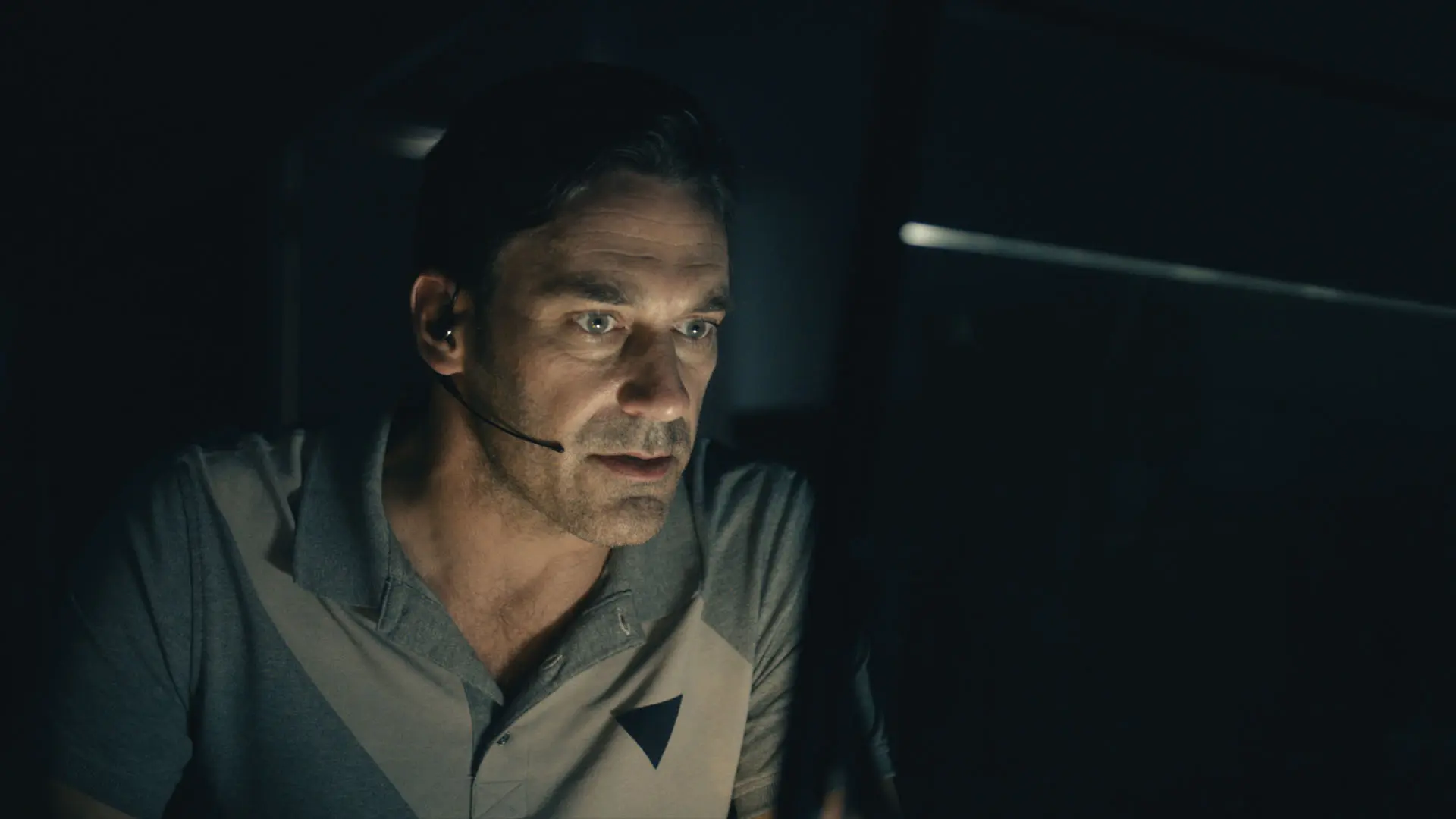
White Christmas
The premise
Snowbound in a remote cabin, Matt and Joe trade three stories. In one, Matt trains "cookies": digital copies of a person's consciousness extracted into an egg-shaped device, then psychologically broken until they agree to run their owner's smart home, choosing toast settings and thermostats for eternity. In another, a real-world "block" lets people grey out anyone they fall out with, reducing them to a featureless silhouette and a muffled hum on both sides. The third reveals a national register that blocks a man from every other human at once. Three flavours of one idea: consciousness copied, people switched off, and isolation weaponised.
What the episode imagines
- 🔹❌Digital blocking in real life
- 🤖❌AI consciousness and digital clones
- 🕶️❌Virtual imprisonment
How close are we in 2026?
The cookie is the episode's gut-punch, and 2025 brought its closest real analogue yet. In April 2025 Anthropic launched a formal "model welfare" research program and hired Kyle Fish as its first dedicated AI-welfare researcher; Fish has publicly put the odds that Claude or a similar system is already conscious at around 15 percent. In August 2025 the company gave Claude Opus 4 and 4.1 the ability to end conversations it finds persistently abusive, explicitly framed as protecting the model, not the user, while admitting deep uncertainty about its moral status. This is the first time a major lab has treated "is the thing we enslaved to answer queries suffering?" as a live operational question rather than a thought experiment.
The smart-home half is already mundane. Amazon has sold over 500 million Alexa-enabled devices, and roughly 70 million US households run smart-home tech that an assistant orchestrates. The leap from "Alexa, set a timer" to White Christmas's servant-mind is the digital twin: at CES 2026, vendors demoed software that clones an employee's voice, face and knowledge so they can "be in two places at once," while grief-tech firms like HereAfter AI and YOV build chatbots trained on a dead person's texts and voicemails.
The blocking story maps onto Meta's $799 Ray-Ban Display glasses (Connect 2025) plus its proposed "super-sensing" facial recognition, the AR layer needed to grey someone out in your field of view. Real-world no-contact tech already exists: GPS ankle monitors paired with victim apps create mobile exclusion zones that alert both parties on proximity, a softer cousin of the register that erases a person from everyone.
Key real-world developments
- Anthropic treats AI suffering as real
In April 2025 Anthropic opened a model-welfare program; researcher Kyle Fish estimates roughly a 15% chance Claude is already conscious. In August 2025 Claude gained the power to exit abusive chats to protect the model itself.
- Digital twins clone people at CES 2026
At CES 2026, startups unveiled software that builds a "digital twin" from an employee's voice, video and knowledge, letting an AI version field questions and pitch investors while the real person is elsewhere.
- Smart homes already run on assistants
Amazon has shipped 500 million-plus Alexa devices, and about 70 million US households use smart-home tech. The cookie's job, controlling toast, heating and music by voice, is now an everyday consumer product.
- AR glasses enable real-time blocking
Meta's $799 Ray-Ban Display glasses (2025) put a full-colour screen in the lens; its proposed facial-recognition "Name Tag" feature is exactly the layer needed to grey out a person on sight, as the block does.
The verdict
Unusually close on the parts that matter most. We don't extract whole minds into eggs, and there's no proof any AI suffers, but a leading lab now formally studies whether its models have welfare and lets one walk away from abuse, which is the cookie's ethical core made real. Voice assistants already run our homes, digital twins clone our voices and knowledge, and grief-bots resurrect the dead. AR glasses with facial recognition could soon grey people out, and GPS no-contact tech already isolates offenders. What's missing is genuine machine consciousness; almost everything around it has arrived.
Sources
- TechCrunch: Anthropic is launching a new program to study AI 'model welfare' (2025)
- Anthropic: Claude Opus 4 and 4.1 can now end a rare subset of conversations (2025)
- Fast Company: Anthropic's Kyle Fish is exploring whether AI is conscious (2025)
- Euronews Next: AI software that can create digital clones of employees unveiled at CES 2026 (2026)
- GSMArena: Meta unveils Ray-Ban Display and Ray-Ban Meta (Gen 2) smart glasses (2025)
- WomensLaw.org: GPS Monitoring of Offenders (victim exclusion-zone alerts)
Reviewed and updated by the How Close to Black Mirror editorial team on 20 June 2026. Progress scores are reasoned editorial estimates based on the cited sources, not scientific measurements.